Generative Engine Optimization Hong Kong: B2B SEO
Financial services firms in Hong Kong are already seeing 8–12% of qualified leads arriving from AI chat interfaces. Not from Google. Not from LinkedIn campaigns. From ChatGPT, Perplexity, and Baidu’s ERNIE Bot — and most local B2B marketers are only now realising they have no strategy for any of it.
Gartner predicts traditional search volume will drop 25% by 2026. McKinsey puts $750 billion in revenue at stake by 2028 as AI-powered search reshapes discovery. For Hong Kong’s B2B sector — fintech, logistics, professional services, cross-border manufacturing — the window for comfortable deliberation has closed. Generative engine optimization isn’t a horizon play anymore. It’s table stakes.
Why Hong Kong Feels This Pressure Differently
Hong Kong sits at the fault line between Western AI platforms and China’s generative ecosystems, which makes single-market content strategies instantly obsolete. A logistics firm targeting APAC procurement teams must surface in Perplexity responses for Western buyers while simultaneously appearing in Baidu’s AI-generated answers for Mainland partners in Shenzhen. No other market in the region carries that dual burden so acutely.
Forrester reports AI-generated traffic now represents 2–6% of total B2B organic traffic globally. In Hong Kong, where digital maturity runs ahead of regional averages, that figure climbs higher — and the leads that arrive are better qualified. Prospects come pre-educated by AI synthesis, which is why conversion rates on AI-referred traffic are running at roughly 2.3x the organic search baseline, with sales cycles that are 40% shorter. The AI has already done the nurturing.
Then there’s the compliance dimension, which most agencies here are quietly ignoring. Hong Kong’s Personal Data (Privacy) Ordinance intersects awkwardly with AI training practices, creating genuine legal gray zones around content licensing and data usage. Brands that don’t audit their consent frameworks risk exclusion from AI training datasets — or worse, regulatory scrutiny from the PCPD at exactly the moment a competitor is building citation authority. Add the Cyberspace Administration of China’s algorithm recommendation regulations for any firm with Mainland exposure, and you have a compliance matrix that no generic global SEO playbook addresses. Frankly, the consultants selling AI transformation packages in Wan Chai right now are making a killing off exactly this confusion.
How Generative Engines Actually Decide What Surfaces
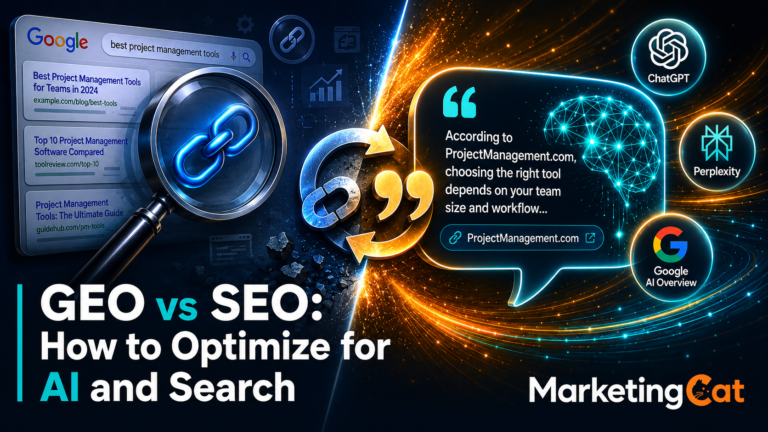
Traditional SEO chased PageRank and keyword density. Generative engine optimization requires understanding something structurally different: citation logic, source authority signals, and the structured data that large language models prioritise when assembling a response.
Generative engines don’t rank pages. They extract and synthesise. When a procurement director asks, “Which Hong Kong-based cloud security vendors support ISO 27001 compliance?”, the AI doesn’t return ten blue links — it generates a paragraph citing two or three sources, often without click-through attribution. Your goal is to become one of those sources. Everything else is secondary.
Three factors determine whether your content gets extracted. Structure matters most immediately: LLMs favour clearly formatted, scannable text with descriptive headings. A 2,000-word post hiding behind vague subheads loses to a 600-word competitor article titled “5 ISO 27001 Implementation Steps for Hong Kong Financial Services.” Clarity of structure is a ranking signal now, not just a UX courtesy.
Authority signals have also shifted. Backlinks still matter, but AI models weight citations from .edu domains, government portals, and recognised industry publications far more heavily than directory links. A mention in the Hong Kong Trade Development Council’s research library carries more extractability value than 50 directory submissions. Similarly, the HKMA’s published guidance, FinTech Association of Hong Kong reports, and peer-reviewed sources all carry disproportionate weight in LLM training data — which means getting quoted in those channels is now a content distribution strategy, not just PR.
Recency is the third factor, and it cuts hard. If your last published insight on cross-border payments regulation dates to 2022, you are invisible to queries with temporal markers — “current,” “2025,” “latest.” Generative engines deprioritise stale analysis in fast-moving sectors, and in Hong Kong’s regulatory environment, almost every sector is fast-moving.
Five Extractability Strategies That Move the Needle
Build content around question-answer pairs. Transform expertise into structured Q&A content targeting natural language queries. A logistics firm asking “How does Hong Kong’s Free Trade Agreement network affect APAC shipping costs?” will surface in AI responses far more reliably than a generic services page. Format answers in 150–250 word blocks — that’s the extraction sweet spot for most LLMs currently.
Implement schema markup properly. FAQPage, HowTo, and Organization schema give LLMs structured data to parse. B2B software vendors using correct schema for product features, pricing tiers, and integration capabilities see approximately 3x higher citation rates in AI responses compared to unstructured competitors. Google’s Structured Data Testing Tool is still the validation standard.
Own citeable statistics. AI models gravitate toward novel data. Commission surveys of Hong Kong CFOs on fintech adoption. Analyse public datasets on cross-border transaction trends. When you own the data, you own the citation — which is precisely why McKinsey and Gartner dominate AI responses. Their research creates reference points that cannot be replicated. A firm that publishes original MPF contribution trend analysis or cross-border RMB settlement data becomes a primary source, not a commentary site.
Go deep on niche verticals. A Hong Kong cybersecurity consultancy publishing rigorous technical analysis on Zero Trust architecture for financial services will surface in AI responses far more frequently than a firm offering “comprehensive IT solutions.” Specificity beats breadth in LLM training weights. Always.
Optimise for multimodal responses. Next-generation AI search incorporates images, charts, and video. Manufacturing firms hosting interactive comparison tables with visual diagrams gain substantially more traction than those publishing spec sheets as downloadable PDFs. Structured visual content indexed by AI increases extractability by roughly 40% according to early platform data — though that figure will shift as the platforms evolve.
The 90-Day Implementation Plan Hong Kong B2B Teams Can Actually Execute
Weeks 1–4: Audit and baseline. Identify which AI platforms your buyers actually use — survey customers directly or check referral analytics. Install Perplexity and ChatGPT to test the queries your prospects would ask. Document which competitors appear in AI responses and analyse their content structure. Establish baselines: current AI-referred traffic, brand mention frequency in AI outputs, citation rates. Without this, you’re optimising blind.
Weeks 5–8: Quick wins. Reformat your top ten performing pages with clear H2/H3 structure, add FAQ schema, and convert dense paragraphs into scannable formats. Publish three pieces of Q&A content targeting high-intent buyer queries. Update your robots.txt to allow or block AI crawlers based on your strategy — and add AI-specific clauses to content contribution agreements before your legal team raises it as a problem after the fact.
Weeks 9–12: Strategic content development. Commission one piece of original research relevant to your ideal customer profile. Launch a monthly thought leadership series addressing emerging sector challenges. Build relationships with industry publications and associations for authoritative backlinks. Prioritise question-based topics over promotional material consistently — the algorithm doesn’t care about your product launch.
Measuring What Actually Matters
Stop tracking traditional rankings as a GEO success metric. Instead, measure citation frequency in AI responses to buyer-intent queries, branded traffic from AI platforms via UTM and referrer analysis, and qualified lead volume from AI-sourced visitors. Track share of voice in AI responses monthly by querying 20–30 variations of core buyer questions across multiple platforms. Document which brands get cited, in what context, and how often. This competitive intelligence surfaces content gaps faster than any keyword research tool in the market.
The B2B firms that will dominate Hong Kong’s AI search landscape in 2025 are the ones treating GEO as infrastructure — not as an experimental line item that gets cut when Central office rents spike again. The real risk isn’t getting the strategy slightly wrong. It’s spending another two quarters watching a competitor become the source your prospects’ AI tools trust.