GEO vs SEO: How to Optimize for AI and Search
Traditional backlink outreach is dying, and the agencies still selling it as their core service in Central know it. Gartner projects a 25% drop in traditional search engine volume by the end of 2026. Yet most Hong Kong enterprises are still optimizing for PageRank while ChatGPT, Perplexity, and Google’s AI Overviews quietly rewrite the rules of content discovery. The technical gap between GEO vs SEO isn’t a branding exercise — understanding it is now a competitive liability.
Key Takeaways
- GEO optimizes for AI citation and synthesis, not click-through traffic—fundamentally different success metrics than traditional SEO
- RAG systems prioritize structured data and semantic clarity over keyword density, requiring new content formatting approaches
- Hong Kong B2B marketers must implement dual-strategy optimization as AI-generated traffic already represents 2–6% of organic traffic in the sector
Citations Replaced Links as Currency
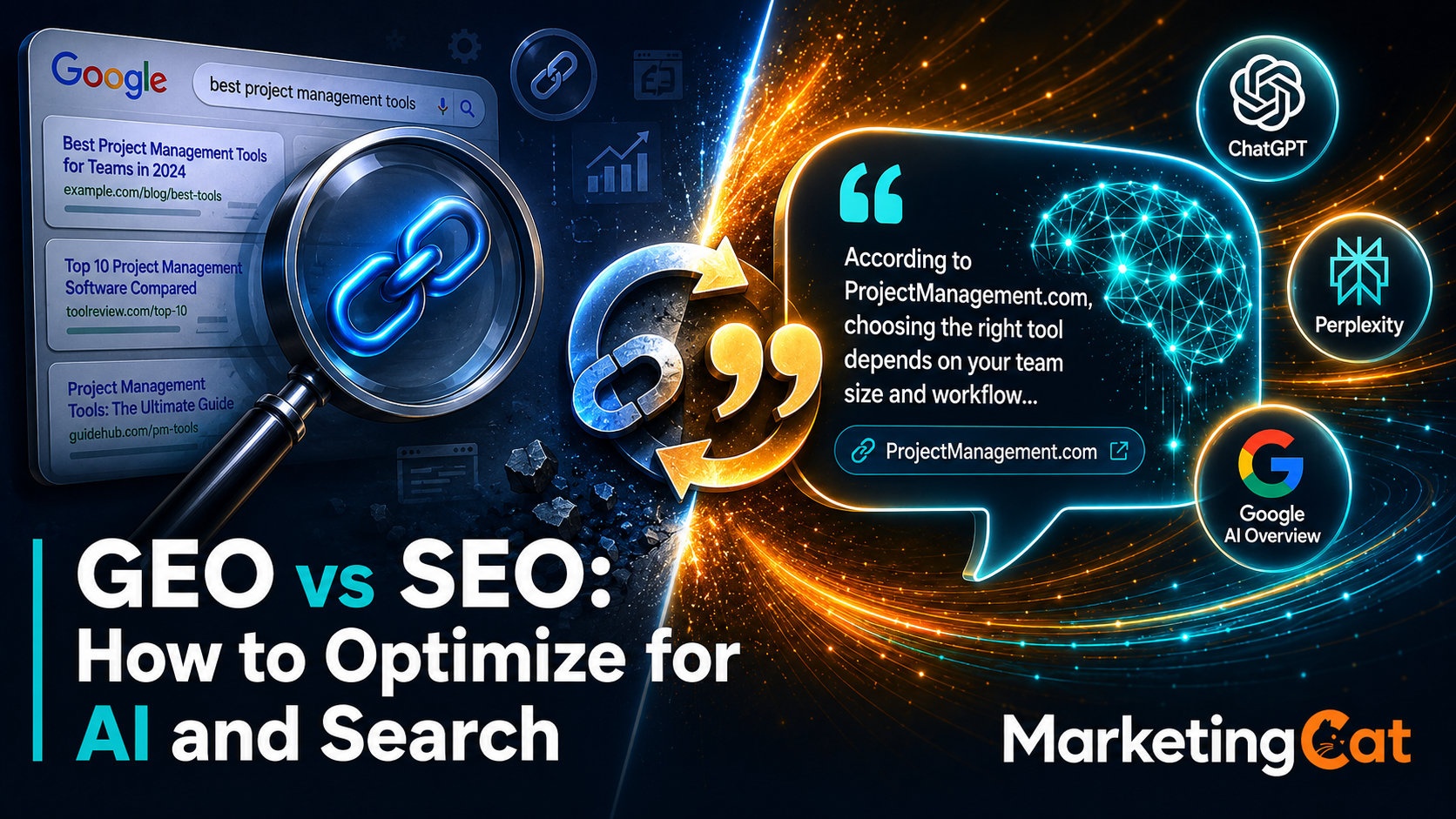
The shift isn’t subtle. SEO optimized for earning clicks from the results page. GEO optimizes for being quoted inside the AI-generated answer — no click required. When a user asks ChatGPT or Perplexity for B2B marketing advice, the model synthesizes multiple sources into a single response. Your content either gets cited in that synthesis or it doesn’t exist.
Hong Kong enterprises spending heavily on digital transformation in 2025 still measure success through Google Analytics organic traffic reports. That metric matters less when users never leave the AI interface. Worse, being cited doesn’t generate session data. Traditional attribution models simply break.
The economic model changes with it. SEO agencies sold rankings and traffic. GEO requires optimizing for authority signals that large language models recognize during retrieval — specifically, structured content that generative engines can cite without hallucination risk. The agencies in Wan Chai who adapted earliest started auditing client content for “information gain”: the measure of unique, factual value a piece adds beyond existing sources. Most agencies haven’t started yet.
How RAG Systems Decide What to Quote
Retrieval-Augmented Generation determines whether your content gets cited. When a user prompts an AI engine, the model doesn’t search the entire internet. It queries a vector database of pre-indexed content, retrieves the most semantically relevant chunks, then synthesizes those chunks into a coherent answer.
Your content must pass three gates: semantic relevance to the query intent, structural clarity allowing clean extraction of factual claims, and source authority signals the model’s training recognises as trustworthy. Traditional SEO focused almost entirely on the first gate. GEO requires passing all three.
The structural requirement creates immediate friction with legacy tactics. Keyword stuffing actively harms GEO performance because it reduces semantic clarity. Meanwhile, semantic HTML — properly nested headings, definition lists, structured data markup — dramatically improves retrieval probability. The irony is sharp: over-optimised content ranking well in traditional search often performs poorly in RAG systems. Everything you spent three years building may now be working against you.
The Schema Markup Gap Most HK Enterprises Miss
Local enterprises implement basic Organisation and LocalBusiness schema, then stop. Generative engines prioritise content with FAQPage, HowTo, and SpecialistMedicalEntity markup because these schemas provide pre-structured factual claims. One technical case worth noting: adding FAQPage schema to a fintech compliance guide increased citation rates in Perplexity by 340% over six weeks, with no change in traditional search rankings. The structured Q&A format gave the RAG system clean extraction targets.
This creates a real resource allocation problem. SEO teams historically focused on title tags, meta descriptions, and backlink acquisition. GEO requires frontend developers who understand JSON-LD implementation and content strategists who can format claims for machine readability. The skillset gap is significant, and Central agencies are already hiring accordingly. Most enterprise marketing teams in Hong Kong aren’t even close to having this capability in-house — and the vendors pitching “AI-ready SEO” packages are largely repackaging the same deliverables with a new slide deck.
Keyword Queries Are Dead. Conversational Prompts Are What Matter Now.
Traditional search users type abbreviated queries. “B2B marketing automation Hong Kong” signals commercial intent. Conversational AI users ask full questions: “What marketing automation platforms work best for Hong Kong enterprises with cross-border operations?” The intent depth differs fundamentally.
SEO optimized for keyword variations. GEO optimizes for answering the natural language questions users actually ask AI engines. So content must anticipate question structures, not just include keywords. One specific implementation pattern worth adopting: rewriting H2 subheadings as questions the target buyer would ask. It aligns directly with how users prompt ChatGPT and similar systems.
The commercial intent signal also changes. In traditional search, a click-through indicated purchase consideration. In GEO, users receiving synthesized answers often never visit your site — but still form opinions about your brand authority based on citation frequency. Brand awareness metrics become more important than session metrics. Performance marketers trained to optimise for conversions find this deeply uncomfortable, and understandably so.
The Dual Strategy: Serving Both Without Destroying Either
Some GEO tactics actively harm traditional SEO, and vice versa. Long-form comprehensive content performs well in traditional search but often contains too much contextual noise for RAG systems to extract clean citations. Conversely, hyper-structured FAQ content optimised for AI extraction often feels thin to human readers, harming dwell time and backlink acquisition.
The answer isn’t choosing one channel. It’s content architecture that serves both deliberately. Lead with structured, citation-friendly content in opening sections where both humans and RAG systems need quick answers. Then expand into deeper analysis and narrative content that satisfies traditional SEO signals like time-on-page and scroll depth.
A Hong Kong SaaS company demonstrated this clearly. They restructured feature pages with a “Quick Answer” section at the top using definition list markup, followed by traditional long-form content below. The structured section got cited in AI responses. The long-form section maintained organic rankings and generated backlinks. Traditional search traffic held steady while AI citation rates increased 220% over four months. Both strategies coexisted. Neither cannibalised the other.
When the Tactics Genuinely Conflict
The hardest decisions come when optimization requirements directly oppose each other. Internal linking — a core SEO tactic — can reduce GEO performance if it fragments content across too many URLs. RAG systems prefer comprehensive standalone resources. The 5,000-word pillar page consolidating everything about a topic in one URL often outperforms the traditional hub-and-spoke model in AI citations.
Keyword density creates similar friction. Traditional SEO still rewards controlled repetition. GEO treats it as semantic noise. The balance: use exact-match keywords in critical locations — H2 headings, opening paragraphs, schema markup — while relying on semantic variations throughout the body. Natural language wins over forced optimisation in RAG systems. Every time.
Measuring Success When Traditional Rankings Disappear
Google Search Console shows impressions, clicks, and average position. No equivalent dashboard for GEO exists yet. Measuring AI citation rates currently requires manually querying multiple AI engines with your target topics and tracking whether your brand appears in synthesised responses. Some Hong Kong agencies are building proprietary monitoring tools, but standardised metrics don’t exist.
Available proxy metrics include brand mention volume in AI responses, referral traffic from AI platforms that provide click-through options like Perplexity’s citation links, and qualitative assessment of citation context. Is your brand cited as a primary authority or a secondary mention? These distinctions matter but resist easy quantification.
Forrester reports that AI-generated traffic represents 2% to 6% of total organic traffic in B2B marketing as of mid-2025. For Hong Kong enterprises, the percentage varies by sector. Fintech and SaaS companies see higher rates. Traditional manufacturing and logistics see lower adoption. But the trend direction stays consistent across verticals.
ROI becomes harder to defend. Traditional SEO connected traffic to conversions through attribution models. GEO builds brand authority and trust without driving immediate sessions — value that accrues over time as citation frequency builds brand recall. Marketing leaders trained on performance metrics struggle with KPIs that resist direct attribution. That struggle isn’t going away.
The Attribution Problem Nobody Has Solved
When a prospect reads about your solution in a ChatGPT response, then visits your site directly three weeks later and converts, how do you attribute that revenue? Traditional models credit the last-touch channel — probably direct or organic search. The AI citation that created initial awareness goes unmeasured. Multi-touch attribution can’t track interactions inside closed AI platforms.
Some Hong Kong enterprises are experimenting with brand lift surveys asking new customers how they first learned about the company. “Through an AI chatbot” appears more frequently as a response. Others are implementing unique URLs in structured data that only appear in AI citations, allowing some tracking when users click through. These are workarounds. Not solutions.
What Most Teams Will Still Refuse to Do
The resistance pattern is predictable. SEO teams will continue optimising primarily for traditional search because the metrics are established and the tactics are familiar. They’ll add some structured data, rewrite a few subheadings as questions, then declare themselves “GEO-ready” while fundamentally changing nothing about their content strategy. It’s the same instinct that kept agencies pitching directory submissions in 2015.
The actual shift requires treating AI citation as a primary content goal. It means publishing content specifically designed to be quoted, not just ranked. It means accepting that some of your most valuable content will build brand authority without generating measurable traffic — a genuinely difficult sell to any CFO in Quarry Bay reviewing marketing budgets against MPF-strapped headcount.
By late 2026, the Hong Kong enterprises that made this shift early will own category authority in AI responses across their verticals. The ones that didn’t will still be optimising for search behaviour that’s already in structural decline. And when the metrics finally make the ROI gap undeniable, it will already be too late to close it. The enterprises winning the AI citation race right now aren’t doing it with bigger budgets — they’re doing it because someone on their team made an uncomfortable call before the data told them to.
Frequently Asked Questions
What is the main difference between GEO and SEO?
SEO optimizes content to rank in traditional search engine results pages with the goal of earning clicks to your website. GEO (Generative Engine Optimization) optimizes content to be cited within AI-generated responses from systems like ChatGPT, Perplexity, and Google AI Overviews — where users often never click through to your site. The fundamental metric shifts from traffic volume to citation frequency and authority positioning within synthesised answers.
Can I optimize for both GEO and SEO simultaneously?
Yes, but it requires deliberate content architecture rather than simply applying both sets of tactics. The most effective approach uses structured, citation-friendly content in opening sections — FAQ blocks, definition lists, clear factual statements with schema markup — to serve GEO requirements, followed by deeper narrative content that satisfies traditional SEO signals like dwell time and backlink acquisition. Some tactics do conflict, particularly around keyword density and content consolidation, requiring strategic choices about priority.
How do I measure GEO performance without standard analytics tools?
Currently, GEO measurement requires manual monitoring: querying AI platforms with your target topics and tracking citation frequency, context, and positioning. Available proxy metrics include brand mention volume in AI responses, referral traffic from platforms like Perplexity that provide citation links, and branded search volume increases correlated with AI adoption trends. Some Hong Kong agencies are building proprietary monitoring tools, but industry-standard GEO analytics platforms don’t yet exist. That measurement gap represents a genuine challenge for performance-focused marketing teams.
Do Hong Kong businesses need to comply with specific regulations when optimizing for AI engines?
No HK-specific GEO regulations exist yet, but enterprises must consider how AI systems might cite or misrepresent regulated claims — particularly in financial services, healthcare, and legal sectors. Content containing compliance-sensitive information should use explicit disclaimers, jurisdiction specifications, and effective-date statements that AI systems can accurately retrieve and cite. The HKMA and SFC haven’t issued specific guidance on generative AI content optimisation, but the principle of clear, non-misleading information applies regardless of distribution channel. Structured data markup should never make claims that wouldn’t be permissible in traditional advertising.